
Transit on the Brink
The struggle to save Muni, BART, and other public transit services is a fight for union jobs, working families — and the region’s soul
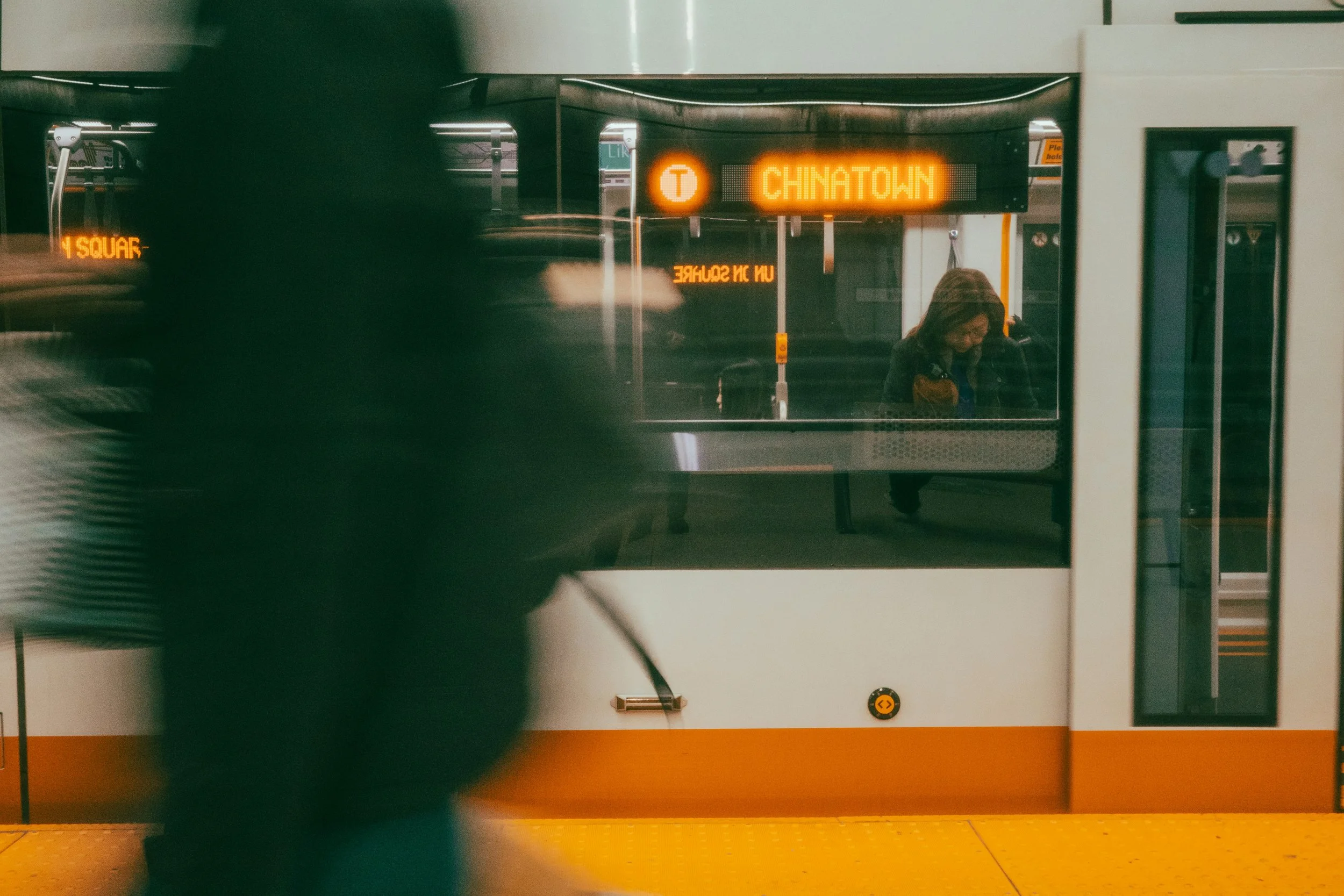
A MUNI train is seen in 2025. | Photo: Fabio Sasso via Unsplash
This November, a pair of ballot measures will ask San Francisco and Bay Area voters to provide critical funding for Muni and BART, helping to avert devastating service cuts and a looming financial crisis for the Bay’s two major transit systems.
When IBEW Local 6 Business Manager John Doherty was asked what would happen if the measures failed, he didn’t mince words.
“I’d rather not think about that,” said Doherty, who also serves as vice-president of the San Francisco Building and Construction Trades Council. “It won’t be pretty. They’ve found themselves in a hole, and they need this money to operate their way out.”
Public transit has long generated vital work for IBEW Local 6 members, and continued investment will support good union jobs across all trades. The two proposals — Proposition H, Stronger Muni for All, and the regional Connect Bay Area Transit Measure — offer voters a chance to keep these systems running.
What’s at stake is more than merely the future of public transportation. It’s overall quality of life for working families in the Bay.
“I think that there’s a recognition that this is critical infrastructure,” said Alex Lantsberg, research and advocacy director for the San Francisco Electrical Construction Industry. “The transit systems are critical life-support systems.”
Muni Needs Money
Before Covid, Muni was already showing some financial cracks. When the pandemic hit, the wheels came off. Ridership collapsed, along with parking and fare revenue, which make up a significant chunk of its income. (Muni is also funded in part through San Francisco’s General Fund, which is facing its own crisis.) Federal, state, and regional pandemic assistance helped, but that funding has since dried up, and the region still hasn’t fully bounced back from Covid’s economic damage.
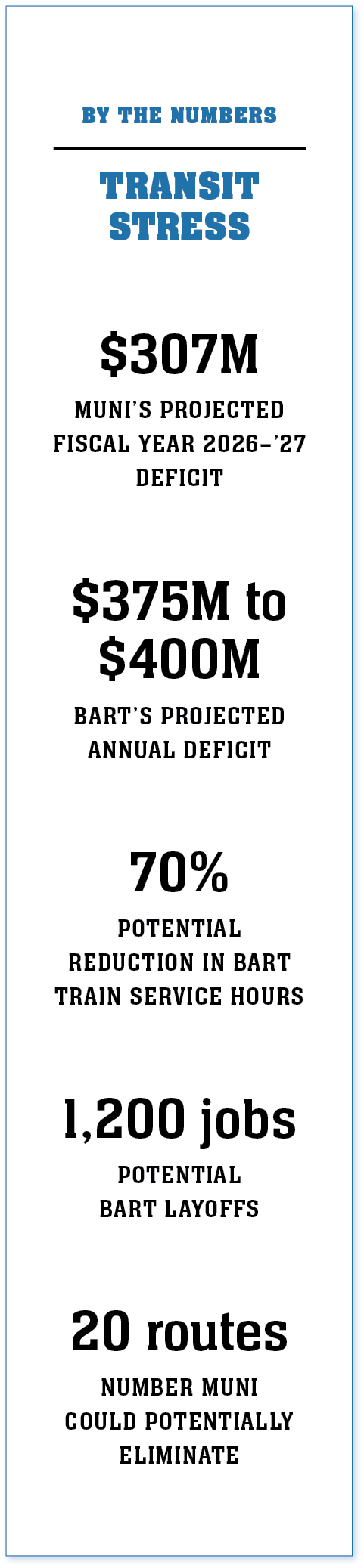
SFMTA identified a $307 million shortfall for fiscal year 2026–’27. That’s projected to grow to approximately $434 million by 2030. A $200 million state loan has helped but is also temporary and not enough to make up the difference.
Prop H would impose an annual parcel tax on San Francisco property and generate approximately $160 million a year for Muni. Combined with the estimated $155 million Muni would receive annually from the regional transit measure also on the November ballot, the two measures would provide approximately $315 million a year — enough to cover SFMTA’s immediate projected operating shortfall.
A Regional Crisis
No transit system is an island, and Muni isn’t the only operator hurting. Transit agencies across the region have suffered the same post-Covid effects, although at different scales.
The sprawling BART system is the behemoth of these. BART was particularly vulnerable to the pandemic because it depended more heavily on ridership, with parking and fares making up 68% of its operating expenses. In our long post-Covid hangover, BART projects annual deficits generally ranging from $350 million to $400 million.
Enter the Connect Bay Area Transit measure, a five-county, 14-year sales tax proposal designed to raise funds and prevent cuts to not only BART and Muni but also Caltrain, AC Transit, and smaller operators. The sales tax increase would be 1% for San Francisco and 0.5% for Alameda, Contra Costa, San Mateo, and Santa Clara counties.
“The threats to the region’s transit systems — and the union jobs those systems support — are more than just existential. A diminished transit system is a diminished jobs picture.”
The measure is estimated to raise $980 million a year, or nearly $14 billion over its lifetime. BART would receive 31% of the share, or just over $300 million annually. Muni would receive 16%.
Avoiding Armageddon
Both measures have attracted broad coalitions of labor, business, and civic leaders, transit advocates, and elected officials. Supporters include San Francisco Mayor Daniel Lurie, the SF Labor Council, IBEW Local 6, Teamsters Local 665, and numerous Bay Area legislators, as well as many local officials.
BART has published contingency plans should the regional measure not pass, and they’re not pretty. If new funding isn’t provided, BART could reduce train service hours by as much as 70%, operate only three lines with two trains per hour, end service at 9 p.m., close as many as 15 stations or abandon portions of the system, raise fares and parking charges by up to 50%, and lay off approximately 1,200 employees.
Muni has not adopted such a detailed plan but says potential cuts could include eliminating as many as 20 routes, reducing service, and doubling wait times.
While the two measures differ from traditional capital campaigns that directly result in construction jobs, the threats to the region’s transit systems — and the union jobs those systems support — are more than just existential. Doherty said that keeping routes in service creates work across the trades, from maintaining streetcar tracks and overhead electrical lines to repairing buses. Electricians and other skilled tradespeople build, repair, and maintain the stations, power systems, facilities, and more. A diminished transit system is a diminished jobs picture.
Then there’s the long-term impact if regional transit falters. No robust transit system means no future capital investments, which also means no big long-term projects that produce thousands of work-hours.
Beyond jobs, a way of life is at stake. So many Bay Area citizens rely on public transit. If those systems make draconian cuts, those who don’t use transit will soon have plenty of company on already jam-packed roads.
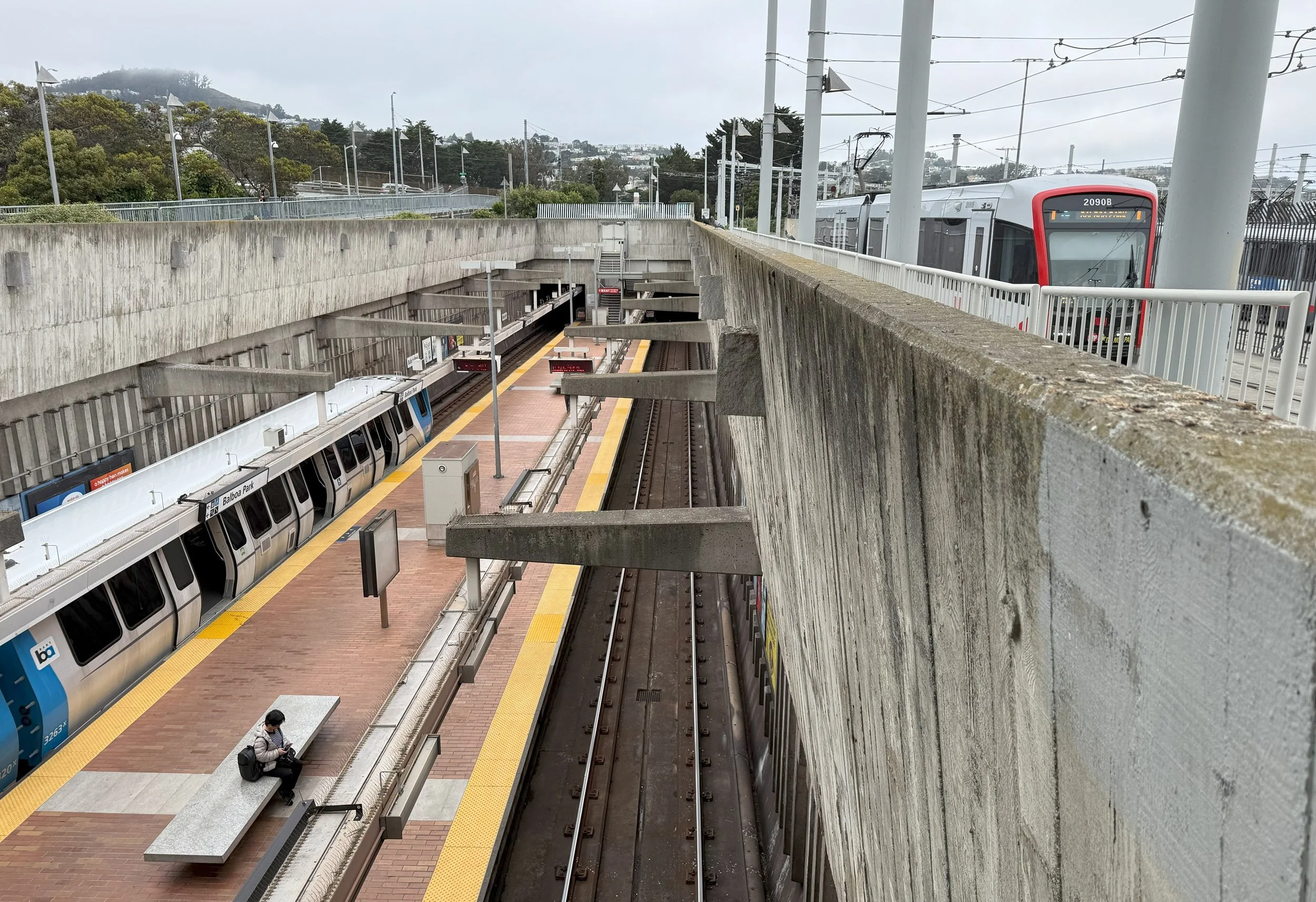
A BART TRAIN and a Muni K train await passengers at the Balboa Park metro complex in 2025. | Photo: SaarPro via Wikimedia Commons
“For working families, public transit is often the most affordable way to get from home to work, and we’re scattered all over the Bay Area now,” Doherty said. “As bad as traffic is, it would just make it worse if they started cutting bus routes. It would be impossible to get anywhere.
“Even if you don’t ride transit, you want somebody in front of you to be on transit.”
Added Lantsberg: “It is really unimaginable what it will do to our ability to freely and affordably move around the region.”