
Negotiate the Terms. Build It Right.
There’s a lot of talk about AI, data centers, and safety happening right now in a very public way. Often, the data center construction jobs are labeled “temporary” to dismiss our voices from the process. I think about the health coverage those work hours provide, the pension contributions that get banked, and the apprentices who gain enough on-the job training to journey out. While it’s true that a construction project always ends, that fact does not erase what the work means to our members and their families.
That’s where I start with data centers. Sure, we build for a living, but I want to know what the work offers our members and what obligations come with it before we’re asked to support a particular project.
So far, we’ve seen blunt instruments entertained as solutions by political leaders. Some argue for a permanent ban on data centers, while others say we need to allow the innovation to proceed in a streamlined way to win the race against other countries’ AI advancements. A growing group of leaders are calling for a moratorium to buy time while we figure out just how to regulate this emerging technology.
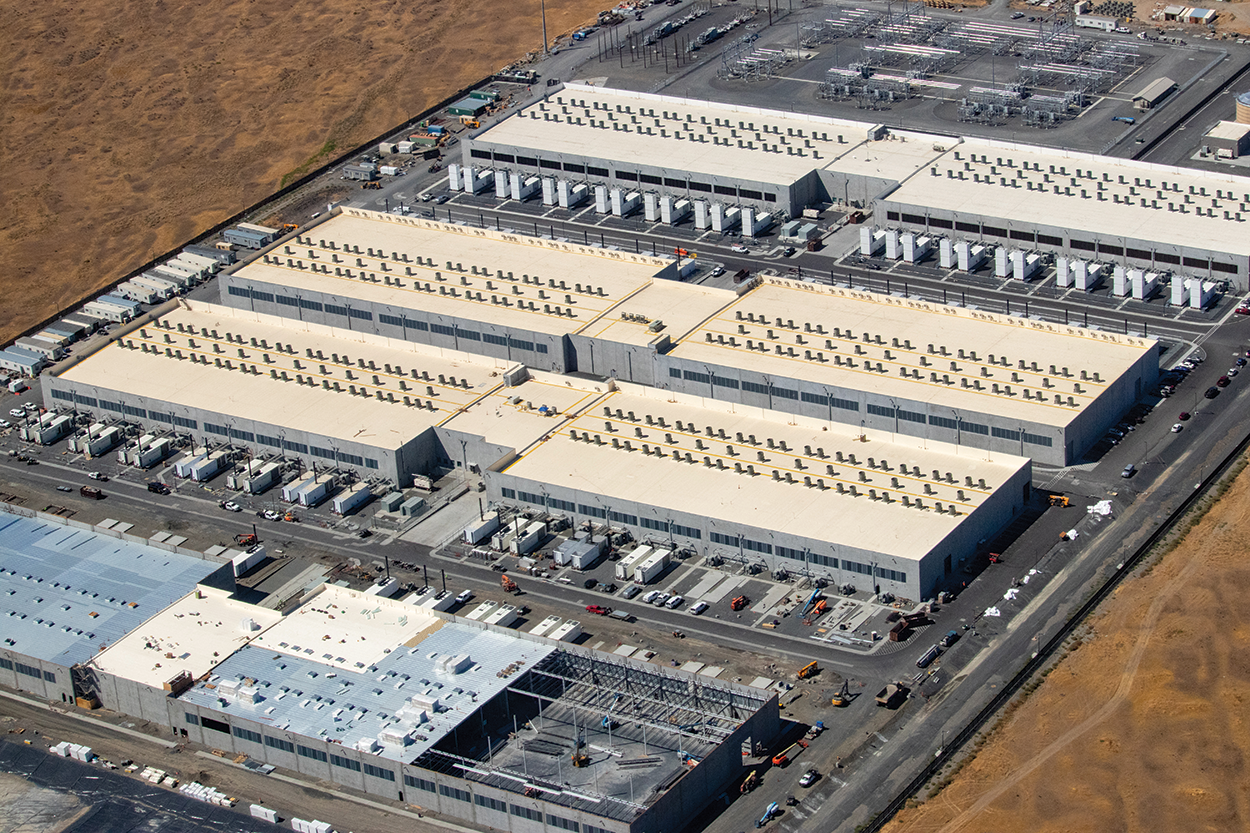
Photo: Tedder via Wikimedia Commons
From my perspective, a permanent ban removes covered projects from consideration, along with the opportunity to negotiate how they get built. Streamlining without binding commitments is another strategy, usually adopted by corporate-backed politicians. But that’s a problem, too, because fast-tracking permission to build doesn’t in and of itself establish union wages, apprenticeship opportunities, or community benefits.
Locally, some elected officials and community groups are advocating for a moratorium. Some candidates seem to be trying to one-up one another to see who can take the strongest possible position on regulation.
I see a temporary moratorium as a negotiating window rather than a permanent prohibition. This might be slightly out of step with NABTU and some of our affiliates, but hear me out.
My view is more of a bargaining theory, and it’s a straightforward one: Keep a path to construction open, but negotiate while the terms of development remain unsettled. Under that approach, our support is part of the negotiation. The potential leverage comes from having decisions still being made, with a government-required pause — if done well — providing time to settle the conditions for construction before the first shovel hits the ground.
You’ll see some developers take this approach by default, but not enough of them do. Friends of this council such as Fifth Space and Strada already use this playbook. They establish credibility and relationships and demonstrate good faith to labor as well as community members. That’s a smart strategy no matter what kind of project we’re building, but it’s especially good for ones that trigger a lot of pushback.
Let’s get back to talking about our work. We can use a moratorium to negotiate conditions that include project labor agreements, prevailing wages, registered apprenticeship utilization, safety, labor harmony, and wage theft prevention. We can flesh out who’s covered, who verifies compliance, and what happens when a contractor breaks the agreement. We want to know what’s enforceable — not just what was promised at a hearing.
Our members also go home and pay utility bills. Their families use the local water supply; in fact, our public sector members are responsible for the infrastructure that delivers it. They have a stake in who pays for new energy infrastructure, how water is conserved, and whether environmental mitigation happens. As workers and neighbors, we share these concerns.
During a moratorium, we should also discuss and negotiate what happens when a facility closes. Who pays for decommissioning and cleanup? Is adaptive reuse practical? What obligations survive a sale before completion?
“My view is more of a bargaining theory, and it’s a straightforward one: Keep a path to construction open, but negotiate while the terms of development remain unsettled.”
Whether this approach works depends on its scope, timetable, and process. Delays can put financing and employment at risk. Direct bargaining or existing review might well secure the same commitments. When Sophie Maxwell represented District 10 as a San Francisco supervisor, she had to grapple with server farms and innovation related to the dot-com boom. That tested a lot of relationships back then, and we ended up with a conditional use authorization process that was negotiated by stakeholders. So now, we have a chance to use lessons learned and help shape what gets negotiated and what work is affected.
Meanwhile, the industry’s own leaders are debating the pace of AI more broadly. This month, some CEOs called for decelerating advances over safety concerns, while others opposed a slowdown. These calls concern advances in AI capabilities rather than communicate that there should be a blanket stop to data center construction. But it’s all connected when it comes to market perception and investments.
What are executives signaling to investors about spending and returns? Are they also trying to reassure a worried public? How would their proposed rules affect competitors? What, if anything, changes in their construction plans based on these uncertainties?
Obviously, we can’t read their minds or predict a market crash. But people with whom I speak on Wall Street don’t think a bubble is a matter of if but more of when. Surely we can ask which investments are committed, which remain projections, and who carries the obligations if plans change. However, those are forecasts, and I’m more interested in what we can do right now.
What does every project need? Infrastructure. So, let’s do something concrete such as grid work.
California’s transmission planning addresses reliability and growing electricity needs from buildings, transportation, and manufacturing, including data centers. In February, independent electricity provider LS Power announced that construction had begun on the Manning substation project in Fresno County, including a new substation and approximately 12 miles of transmission line That’s an actual construction project — not a forecast about the next AI model.
Not every grid project is ready tomorrow. Permits, financing, and equipment are still very important considerations. But where those requirements are met, grid work can proceed while separate data center negotiations continue.
There are terms to settle before certain projects proceed, and there is work we can do now that will help those projects once said terms are decided on. A housing advocate used to remind me that sometimes we must “slow down to speed up.”
We’ll be looking to leaders at the SF Public Utilities Commission, the SF Board of Supervisors, and the mayor’s office, as well as our development partners, to move forward thoughtfully, and always with labor and community at the table.
After all, the advance planning — if it includes the proper stakeholders — lays the foundation necessary to build support and entitle good projects.
One of our mottos is: “Build it right the first time.” Maybe it’s time we helped an industry appreciate that they should entitle it right the first time.