
A Groundbreaking Decades in the Making
At long last, Candlestick Point moves forward with housing and jobs. Here’s what to look forward to — and some history to look back on.
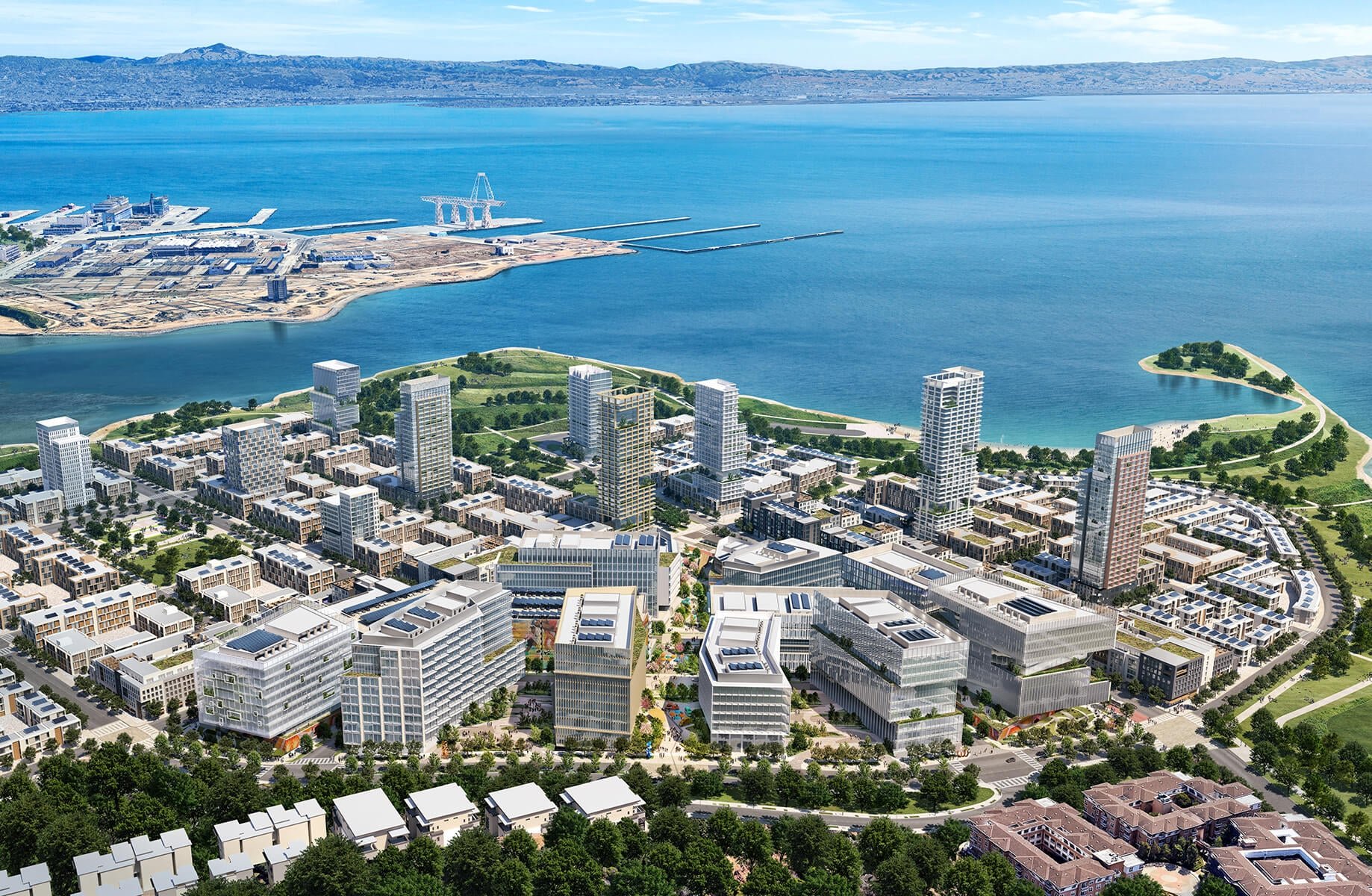
A RENDERING from architectural firm Perkins & Will illustrates Candlestick Point’s potential as a dense mixed-use neighborhood. | Rendering: Perkins & Will
On Wednesday, September 9 — over 16 years after the project was entitled and more than two decades after the first plans were developed — ground finally broke on Candlestick Point’s redevelopment.
Why it took so long to reach this milestone is a long and complicated story — failure is an orphan, as the saying goes — but the project’s potential impact on jobs and San Francisco’s economy is difficult to overstate.
“It’s an exciting day to finally see [this] come to fruition after all these years,” said San Francisco Building and Construction Trades Council President Larry Mazzola Jr. of the groundbreaking. “It’s going to mean badly needed housing and badly needed jobs.”
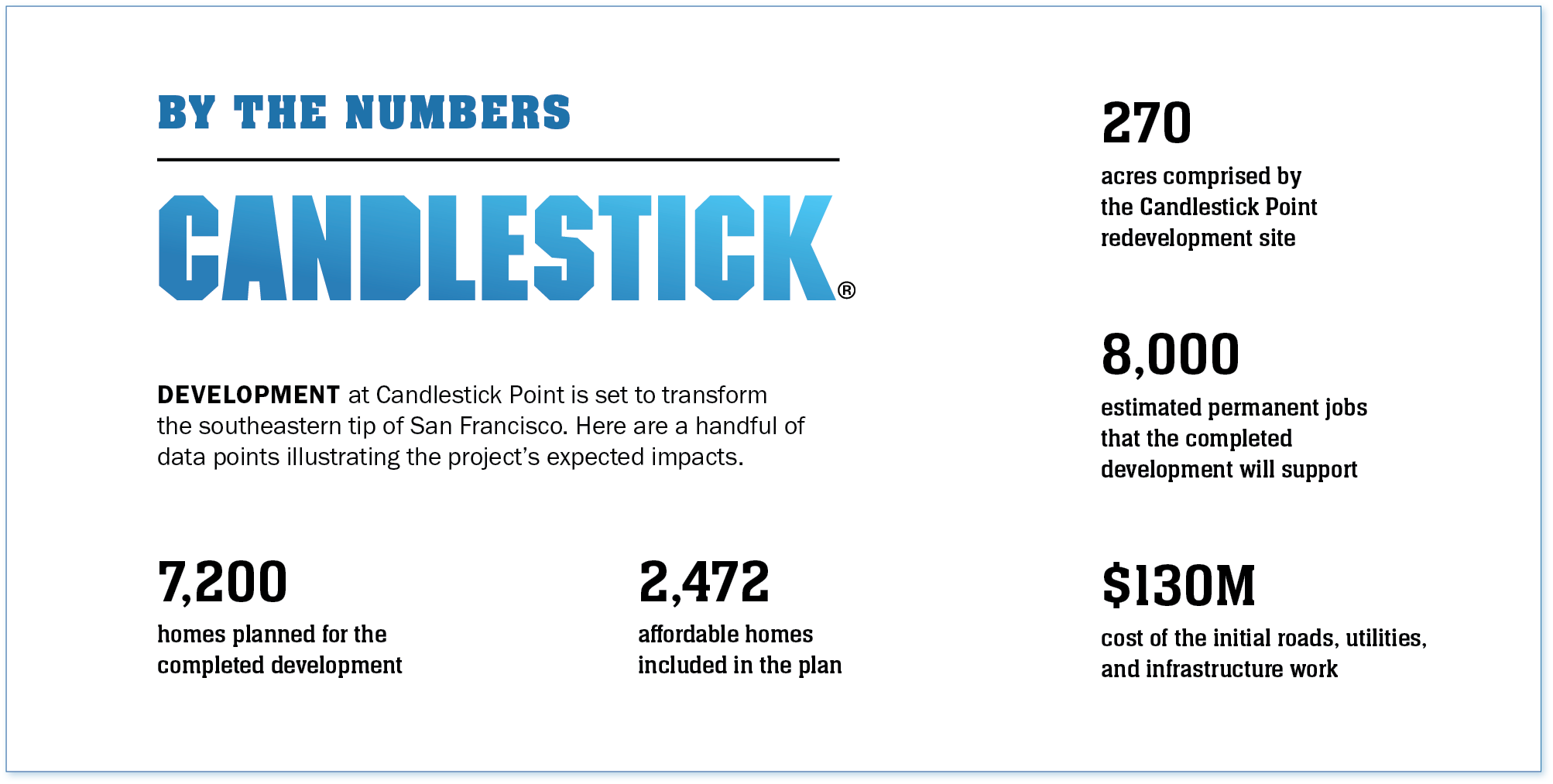
The 270-acre Candlestick Point plan calls for 7,200 homes, including 2,472 affordable units. It’ll bring an additional 2.8 million square feet of flexible office and research-and-development space to the City, as well as approximately 550,000 square feet of retail, entertainment and hospitality space, including a hotel. The development will span more than 60 city blocks, with 105 acres of parks and open space along approximately 2.5 miles of shoreline.
“This right here is a culmination of everybody coming together, standing steadfast, and continuing to persevere,” District 10 Supervisor Shamann Walton said at the groundbreaking ceremony.
Developer FivePoint estimates that the completed project will support more than 8,000 permanent jobs, in addition to the thousands of construction jobs it’ll create across all trades and classifications as the development is built out over the coming decades.
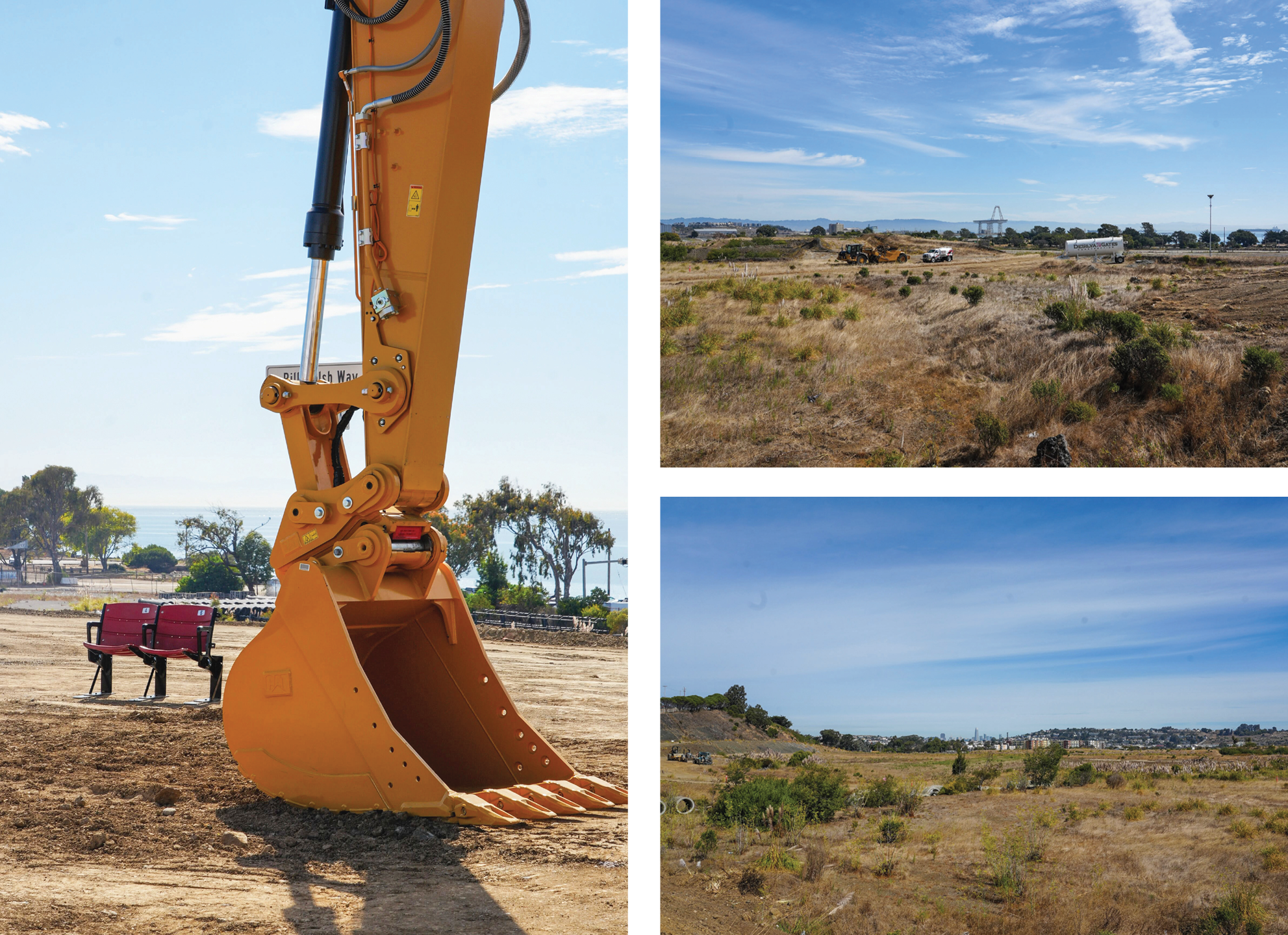
IN THE PHOTO above at left, two stadium seats appear behind the bucket of an excavator. The seats were brought out as a symbolic gesture in memory of Candlestick Park, which was demolished in 2015, leaving the vacant land in the photos at right to be developed into the new Candlestick Point megaproject.
“After decades of abandoned plans and false starts, Candlestick Point is finally moving forward.”
All of that construction work in the pipeline will be covered under a project labor agreement.
“We still have 60 members out of work, and I have over 100 traveling,” said Mazzola, who is also the longtime business manager of UA Plumbers and Pipefitters Local 38. “If they weren’t traveling to other areas, I’d have 160. So, it’s still not busy enough in San Francisco proper.
“We’re sending a lot of members to San Jose and Sacramento as travelers because [those cities are] busy. San Francisco is not there yet. So, when jobs like this are breaking ground, it’s exciting to get some of our members back home working and not having to commute.”
Motorists passing Candlestick Point on Highway 101 shouldn’t expect to see new towers rising anytime soon, though. The first phase involves $130 million in horizontal construction, including roads, utilities, and other infrastructure needed before buildings can begin going up.
The Candlestick Point redevelopment traces its roots to the Hunters Point Shipyard development plan of the late 1990s. In 2010, the SF Board of Supervisors amended the Bayview–Hunters Point and Shipyard redevelopment plans, bringing Candlestick Point and Shipyard Phase 2 together under a single developer.
An early version of the redevelopment included a new 49ers stadium, but the team eventually chose Santa Clara as the city where it would build its digs. The 49ers played their final game at Candlestick Park on December 23, 2013, a playoff-clinching 34–24 victory over the Atlanta Falcons led by quarterback Colin Kaepernick. Boyz II Men performed during a postgame farewell ceremony. Demolition of the stadium began on February 4, 2015.
A massive outlet mall was also proposed for the large site. But as shopping malls became about as popular as typewriter repair shops as the 2010s wore on, that plan was scrapped, too. In the face of an ever-accelerating housing crisis, the development was eventually reimagined to include far more residential units than initially planned.
So, what took so long? The original stadium proposal collapsed, the mall plan died, the ripple effects of the 2008 financial crisis continued to drag on the economy, and California dissolved its redevelopment agencies. Problems with the environmental cleanup at the nearby Shipyard caused continued delays, followed by the Covid-19 pandemic and a slow recovery marked by high interest rates and soaring construction costs.
Now, after decades of abandoned plans and false starts, Candlestick Point is finally moving forward with new housing and, just as crucially, new jobs.
“It’s a win-win,” Mazzola said. “We’re happy to finally see it break ground.”