
Work on Deck for $50M Crocker Amazon Ball Field Renovation
But opposition cries foul at artificial turf, lack of community outreach
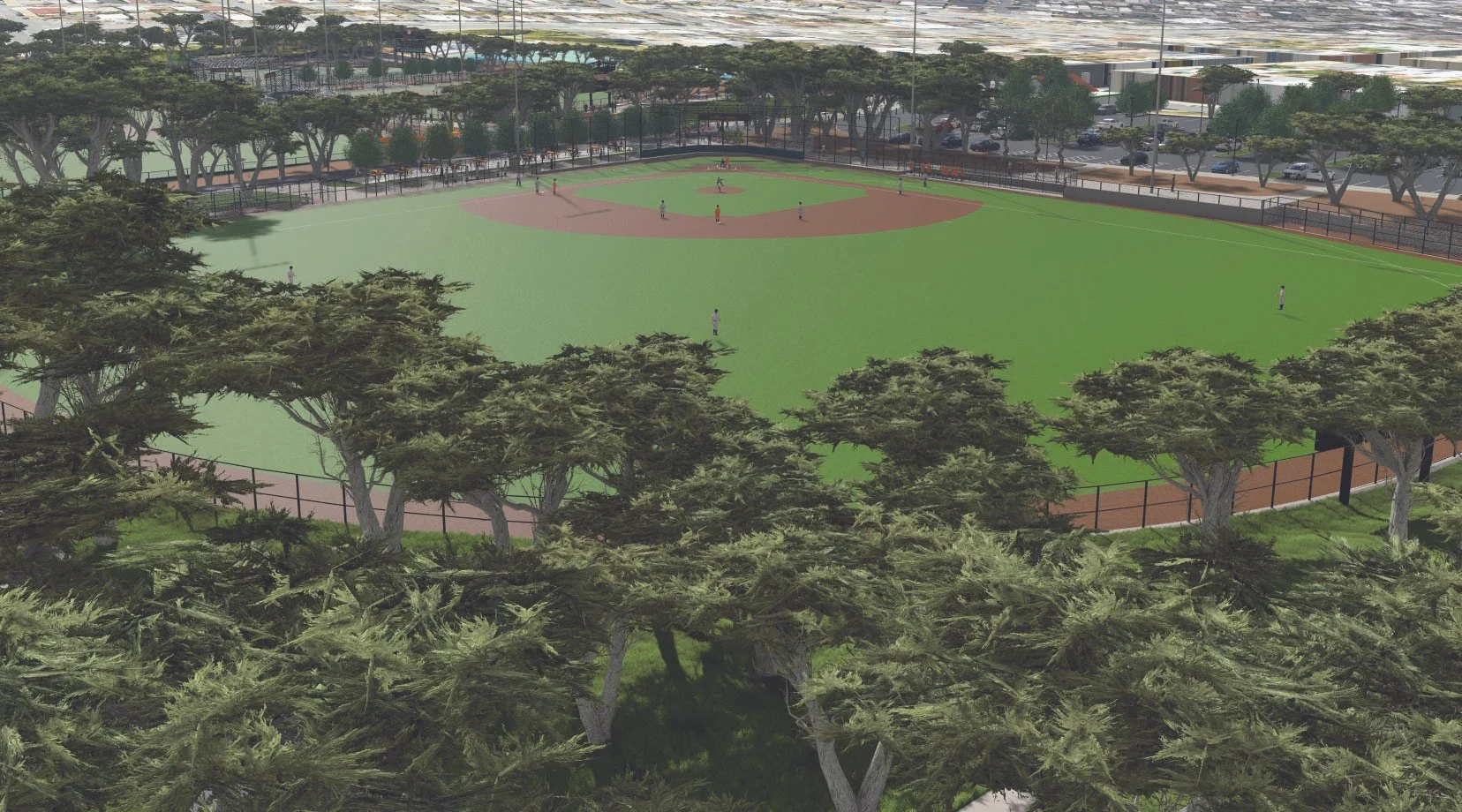
THIS RENDERING, courtesy SF Rec and Parks and the SF Giants, depicts a renovated ball field at Crocker Amazon Park. | Photo: letsplaycrocker.com
A proposed joint project between the San Francisco Recreation and Parks Department and the SF Giants Community Fund to upgrade and refurbish several ball fields at Crocker Amazon Park could bring much-needed work to a range of building trades.
But organized opposition — citing concerns including limited community engagement and objections to artificial turf — threatens the project.
The $50 million renovation would be funded through a combination of $28 million from the Giants and $22 million from the City. If SF Rec and Parks manages the project, the work would fall under an existing project labor agreement. If the Giants serve as construction manager, building trades officials say they remain confident the work would be performed by a union crew, based on previous agreements with the ballclub.
Several issues plague the Crocker Amazon fields, which are used by a variety of youth programs, including SF Little League, Junior Giants, SF Youth Baseball League, and the SF Bay Sox. Youth sports groups say the current fields are unsafe and often unusable due to poor drainage, gopher holes, and wet-weather closures.
The project would reorient and renovate the existing fields to create six new baseball diamonds, with a scope of work that includes field reconstruction; synthetic turf installation; drainage and base work; pathway lighting; parking lot improvements; batting cages; a new dog play area; a restroom; walkways; irrigation; landscaping; picnic areas; and park furniture.
“I think what’s being proposed is good. Could it be made better? We’ll see.”
Several trades stand to benefit from the project, including laborers, carpet and tile layers, operating engineers, plumbers, electricians, cement masons, and teamsters.
Construction could begin in 2027.
Members of the SF Building Trades are already busy with similar work, including the installation of synthetic turf at multiple schools within SFUSD.
The Crocker Amazon project, however, has drawn some opposition. Wesley Saunders, a neighborhood resident and member of Keep Crocker Real, lamented the lack of community input in the project’s planning stages.
“It’s a community that I am part of, and it feels very much like — the mildest term I could use would be ‘disrespectful,’” Saunders said. He compared the Crocker Amazon process with other projects, including Sunset Dunes and the Jackson Playground renovation in Potrero Hill, both of which involved months of community outreach. Crocker Amazon, he noted, is a largely working-class, immigrant neighborhood.
Saunders said he does not believe demand for the ballfields justifies the scale of the proposed work. Keep Crocker Real also objects to the removal of trees and the replacement of natural grass with artificial turf, saying it would diminish the neighborhood’s natural open space. Saunders argued that if Rec and Parks can maintain TPC Harding Park, the city-owned golf course near Lake Merced, it should also be able to maintain natural-grass ballfields at Crocker Amazon.
Saunders has challenged the project’s funding and branding, and he objected to the City’s $22 million contribution, saying the money would be better spent on a smaller natural-grass renovation focused on drainage, reliability, and playability.
The building trades, for one, have no issue with using artificial turf, citing Rec and Parks’ efforts to use the safest materials. The department has traditionally been at the forefront of ensuring the safety of artificial turf.
In an SF Chronicle opinion piece, SF Little League President Kath Gillespie argued that the City lacks enough safe athletic fields and that poor conditions at Crocker Amazon have led to frequent rain-related closures.
“The fields are riddled with gopher holes and frequently become unplayable following routine rainfall due to poor drainage and saturated conditions,” Gillespie reiterated in his column.
The project has backing from SF Rec and Parks, but it still requires approval from the Board of Supervisors and environmental review before moving forward. SF Building Trades Council President Larry Mazzola Jr. sits on the SF Rec and Park Commission and voted in favor of accepting the Giants’ grant.
“I think what’s being proposed is good,” Mazzola said. “Could it be made better? We’ll see. How do we get the best possible project with the funds that we have and still meet the interests of the community?”