
Tax Billionaires? Damn Right.
As unions split over a one-time wealth tax, San Diego Building Trades leader Carol Kim makes the case for Prop 40

Credit: YesOn40.com
Why is a tax on some of the richest people on the planet dividing California’s labor movement?
Proposition 40 on November’s ballot would impose a one-time wealth tax on billionaires who were California residents as of January 1, 2026. Those with a net worth north of $1 billion would pay 5% of their wealth — a figure that wouldn’t include the value of real estate and most retirement accounts. Ninety percent of the collected revenue would go toward healthcare.
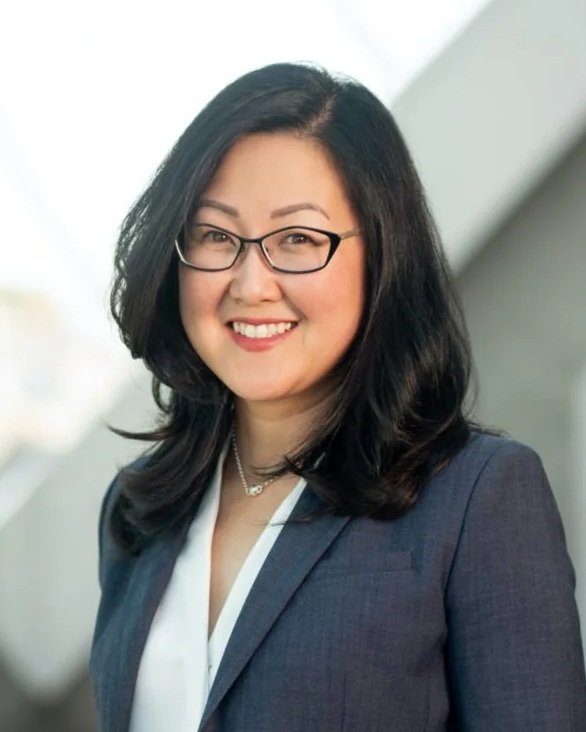
CAROL KIM is business manager for San Diego County Building and Construction Trades Council (SDBCTC) and the CEO of the SDBCTC Family Housing Corporation.
Prop 40 came about to offset Medicaid funding cuts under HR 1, the federal law enacted in July 2025. State analysts estimate the tax would generate tens of billions of dollars in temporary revenue.
Perhaps surprisingly, unions are split on Prop 40. The State Building and Construction Trades Council of California opposes it, arguing it could drive investment out of the state. The California Teachers Association and California Professional Firefighters also oppose it. Supporters include the California Federation of Labor Unions, SEIU–United Healthcare Workers West, Teamsters California, and the California Nurses Association.
The San Francisco Building and Construction Trades Council has not officially taken a position on Prop 40. Both the San Diego and Imperial Counties Labor Council and the San Diego Building and Construction Trades Council support the measure.
Carol Kim, business manager of the SD Building Trades, said the SD and Imperial Counties Labor Council held what she characterized as a “robust discussion” with several of her council’s affiliates to help advance the endorsement motion.
Kim argued that Prop 40 would benefit workers across industries — not just those in healthcare. She also pushed back against criticism that the measure is too reactive or shortsighted. She took a few minutes out of her busy election season schedule to share her thoughts on Prop 40 with Organized Labor.
This interview has been edited and condensed for clarity.
_ _ _
Organized Labor: Why do you personally support Prop 40?
Carol Kim: Because I don’t think billionaires should exist. I think it’s a failure of public policy that they do exist.
I’m not saying that folks shouldn’t be able to make lots of money from smart choices and hard work. I do think that most folks don’t really understand the magnitudes of scale — the disparity between millions and billions. Folks don’t quite grasp how big the gap is between those two groups of numbers. They don’t realize how very rigged our economic systems have become, which is what creates billionaires in the first place.
OL: What’s at stake for working families with Prop 40?
CK: The big thing is the impact of HR 1 on our healthcare systems — it doesn’t just affect low-income people. It actually applies to people who are on Affordable Care Act healthcare plans, as well as employer-provided healthcare plans.
All of the Medicaid money that has come from the federal government over the past decades has really been treated by the healthcare industry as a sort of stable and regular source of revenue — so much so that they’ve budgeted it into the operations for their hospitals and healthcare systems. Medicaid money basically creates the foundation on top of which they build everything else.
Once you cut Medicaid out of the equation, you’re really kind of taking the healthcare systems out at the knees in terms of the way they build their budgets. Those costs are going to have to be offset somewhere. That means they’re going to be shifted onto people who are on ACA healthcare plans or people who are on employer-provided plans. That’s why we’re seeing the massive, exponentially higher increases in our healthcare costs as we head into 2027, when those cuts go into effect.
Credit: YesOn40.com
Everything is more expensive right now. The tariffs have caused the cost of basic goods to skyrocket. The war on Iran has inflated the price of fuel. Everything has gone up, from groceries to utilities to the price of a pair of shoes for your kids’ feet. It’s all growing way too fast to keep up with.
Since goods are now so much more expensive, adding on these bloated, outsized jumps in our healthcare costs means that a lot of folks will be forced to decide whether or not they prioritize other bills. It also means that the quality of all products and services in our society will begin to fray. So, I think it’s just crazy that we’re not more unified to move Prop 40 forward and get this done.
OL: Why is taxing billionaires so divisive?
CK: Different groups have different organizational priorities, and each group really believes that their organizational priorities should be the top priority. That puts some groups at odds with this concept of taxing billionaires — despite the fact that we will all be impacted by this.
OL: What’s your response to the claim that wealth will leave the state if we vote for Prop 40?*a
CK: I think that’s nonsense, partially because this is what they always say, right? When Zohran Mamdani ran successfully for mayor in New York City, naysayers said, ‘Oh, all the millionaires and billionaires will leave New York if he’s elected.’ While it’s true that I think maybe a few rich people did leave New York, the vast majority have stayed, and it’s because people love New York City. It’s an amazing city.
It’s the same with California. This is an amazing state. It’s where the ecosystem for industry and enterprise of all types already exists, and that’s an ecosystem that’s really hard to just up and transplant. If you want a good example of that, you could ask Elon Musk how much success he’s had at moving everybody from Tesla out of California and into Texas.
Beyond all that, I think the money we’re asking for with Prop 40 isn’t that much for these people. What I mean by that is this: When Jensen Huang, who’s the CEO of [AI giant] Nvidia, was asked about this tax and whether or not he would move out of California if it passed, he kind of laughed and said, ‘No, no, I’m not moving out of California. Yeah, I’m just gonna pay it. It’s not a big deal.’
He figuratively shrugged at it. Like, ‘What are you talking about?’ So, no, I don’t think it’s actually going to result in the sky falling the way people are suggesting.
OL: Is there anything else you’d like to add about Prop 40?
CK: I think that if we don’t pass Prop 40 in California, we’ll have to deal with more than just negative impacts on our healthcare systems. It’ll negatively impact our nation’s capacity to tax billionaires at all — and I say that because California is, for better or for worse, considered the bright blue standard-bearer for the country, right? And if progressive, democratic California can’t figure out how to tax billionaires, I don’t know who else will try, especially after seeing the kind of money deployed against it by the billionaires.
What I think we’re seeing at this point is something like a million dollars a day being spent by the opposition campaign, so that’s crazy. In fact, it’s bonkers. The fact that they have that kind of money also demonstrates that this isn’t about the money. This is about whether or not they get to decide how they spend their money or whether or not they’re going to contribute to society as a whole.
I really hope folks — even if they’re feeling a little wary — will dig deep and vote to support Prop 40 because I think that not passing it could cause a lot more harm than we could ever imagine.