
On the Ballot: Safety and Jobs
A $535M bond would fund seismic upgrades, repair aging public safety facilities, and create thousands of union jobs
With the twin benefits of strengthening public safety and creating thousands of construction jobs, the latest Earthquake Safety and Emergency Response (ESER) Bond program should be an easy sell.
The proposed 2026 bond — recently announced as Measure A on this June’s ballot — will raise $535 million to fund seismic upgrades and critical improvements to San Francisco’s aging public safety infrastructure.
“By passing this bond, we are taking steps to keep San Francisco safe by giving our neighborhoods the tools they need to withstand emergency events and ensuring our city is ready to respond quickly when disaster strikes,” said Mayor Daniel Lurie in a statement announcing the bond effort.
“Advocacy for the bond comes across less as alarmism than as realism grounded in undeniable history.”
For Charley Lavery, district representative and auditor of Operating Engineers Local 3 and a Workforce Investment San Francisco board member, Measure A is a no-brainer.
“We know that for San Francisco, it’s just a matter of time before we have another major earthquake,” Lavery said. “It’ll help the City keep functioning in the event of a disaster and [help it] bounce back faster.”
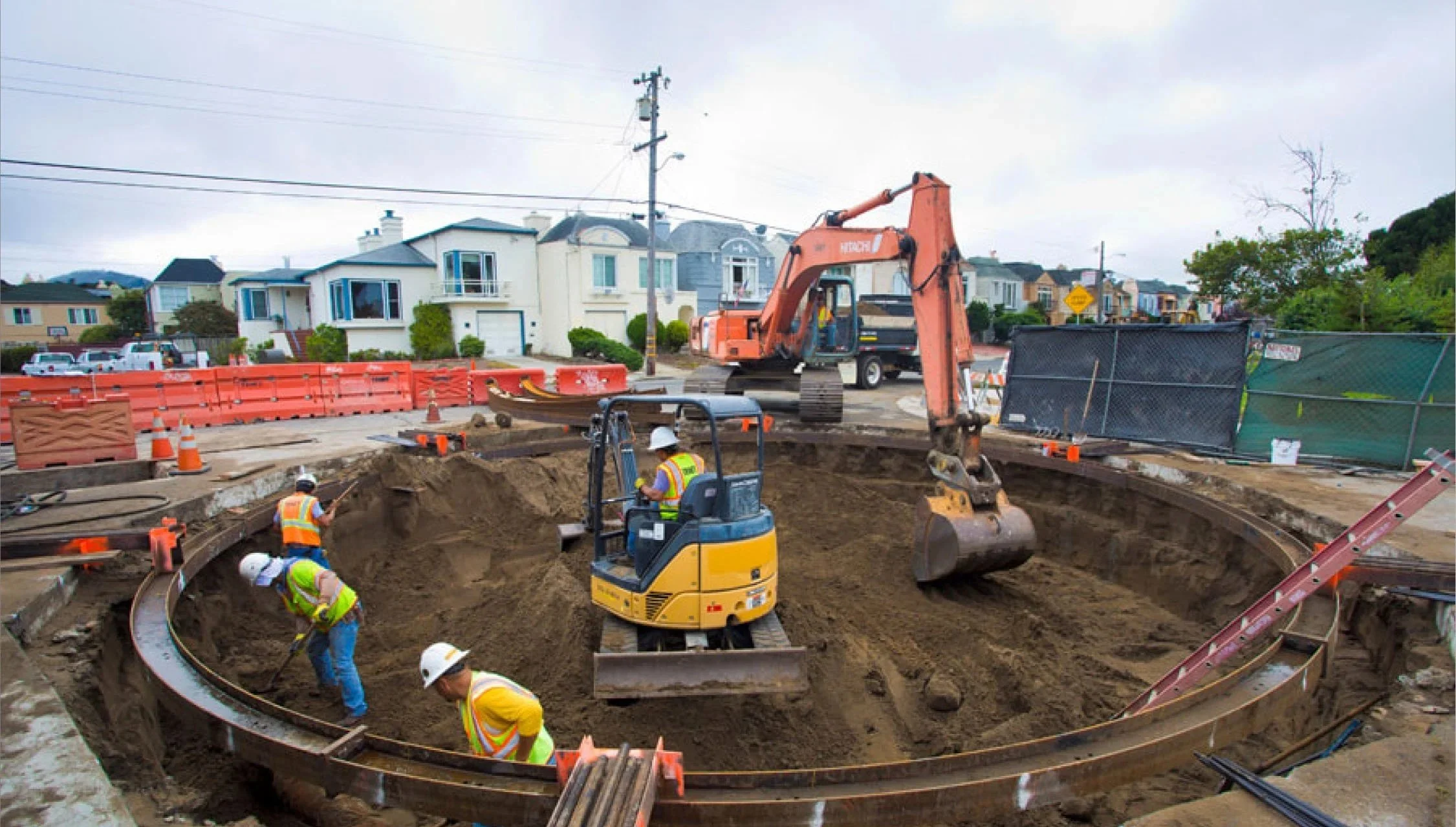
WORKERS construct an emergency firefighting water system cistern. | Photo: sfpublicworks.gov
Lavery’s advocacy for the bond comes across less as alarmism than as realism grounded in undeniable history.
San Francisco sits near two major fault lines, and although the 1906 earthquake was catastrophic, much of the City’s destruction was caused by the fires that broke out afterward.
More recently, the fires in Los Angeles early last year highlighted the importance of having a functioning, dedicated water system ready in an emergency. Recent disasters around the world further highlight the threat, including the 2023 Turkey–Syria earthquake, which measured a magnitude 7.8 and killed more than 50,000 people.
But the need in San Francisco goes beyond warning about what could happen when the Big One strikes. Sam Gebler, president of Firefighters Local 798, said that several of the City’s 44 fire stations are already in urgent need of repair. He spoke of leaky roofs, mold, and shaking walls when trucks back in.
“We know the Big One is coming — the question for us will be whether we did everything we could to prepare and protect our city and especially our first responders.”
“We have a responsibility to make sure that these buildings are safe and structurally sound,” Gebler said. “When the next earthquake does hit, if the fire station collapses, then there’s no firefighters to go help save the City.”
The ESER Bond would fund five areas, dedicating $130 million to expanding and improving the City’s Emergency Firefighting Water System; $100 million to repairing or replacing seismically vulnerable fire stations; $72 million to improving police stations and related facilities; $33 million for urgent repairs at public safety buildings; and $200 million to replacing Muni’s seismically unsafe Potrero Bus Yard. Funding the Muni yard would release an additional $100 million in state and federal funding.
“The proposed ESER Bond will help fund necessary and overdue investments in firefighting capacity, seismic upgrades, and critical infrastructure that will allow our police, firefighters, and transit workers to do their jobs when San Francisco needs them most,” said Board of Supervisors President Rafael Mandelman in a statement. “We know the Big One is coming — the question for us will be whether we did everything we could to prepare and protect our city and especially our first responders.”
Lavery pointed out that the ESER is an “equity measure” because it benefits everyone across the City.
And then there’s the work to be done. The project is expected to generate about 2,000 union jobs — roughly equivalent to four million work hours. It would also create opportunities for apprentices entering the trades.
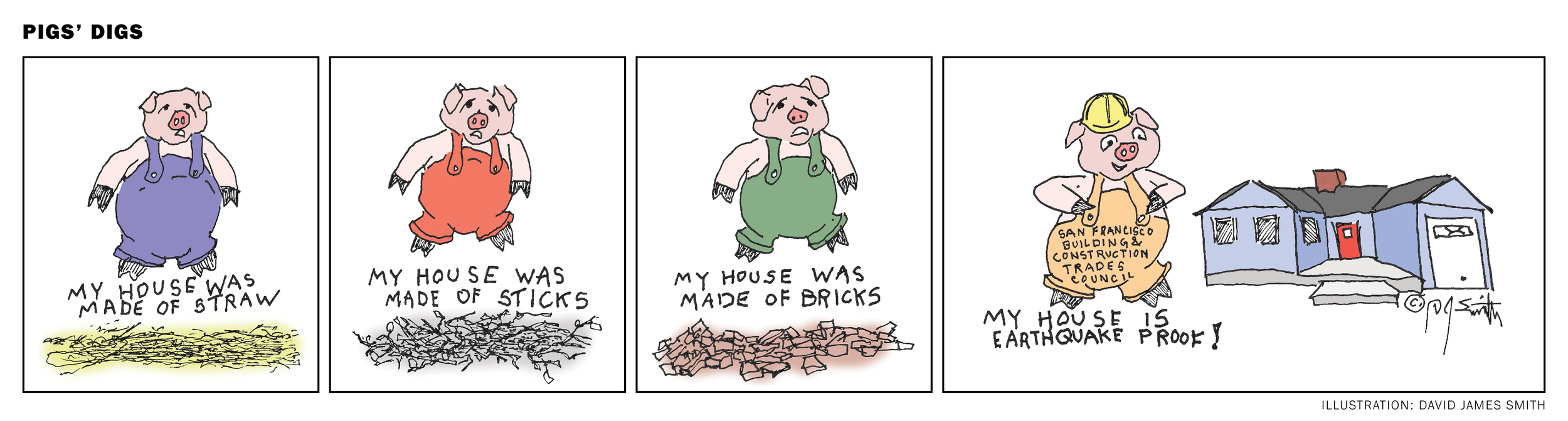
“The non-union simply can’t match our skill level,” Lavery said. “Our workers are the most highly skilled out there, and it means that the City will get the highest-quality utilities and facilities built by a local skilled workforce.”
Measure A is the fourth such bond following voter-approved ESER programs in 2010, 2014, and 2020. Those three bonds totaled more than $1.4 billion in emergency preparedness funding and created millions of work hours for the trades.
“This bond is necessary for a lot of reasons,” Gebler said. “The City’s general fund simply doesn’t have the money right now to complete major infrastructure projects. That’s typically the case. It’s really kind of the only way that the city can afford to make these improvements in infrastructure right now, and so, without it, everything just crumbles and fails.”
Lavery is too cautious to take anything for granted at the ballot box. While Measure A sounds like a slam-dunk, it still needs 66% of the vote to pass.
But if it prevails — as it has three times before — voters will deliver a significant jolt to construction workers. That’s a good jolt, mind you.
“This is exactly the type of boost that all trades need right now,” Lavery said.