
From Former Power Plant to Future Proton Power
A cutting-edge, union-built medical facility begins to take shape at the Potrero Power Station site
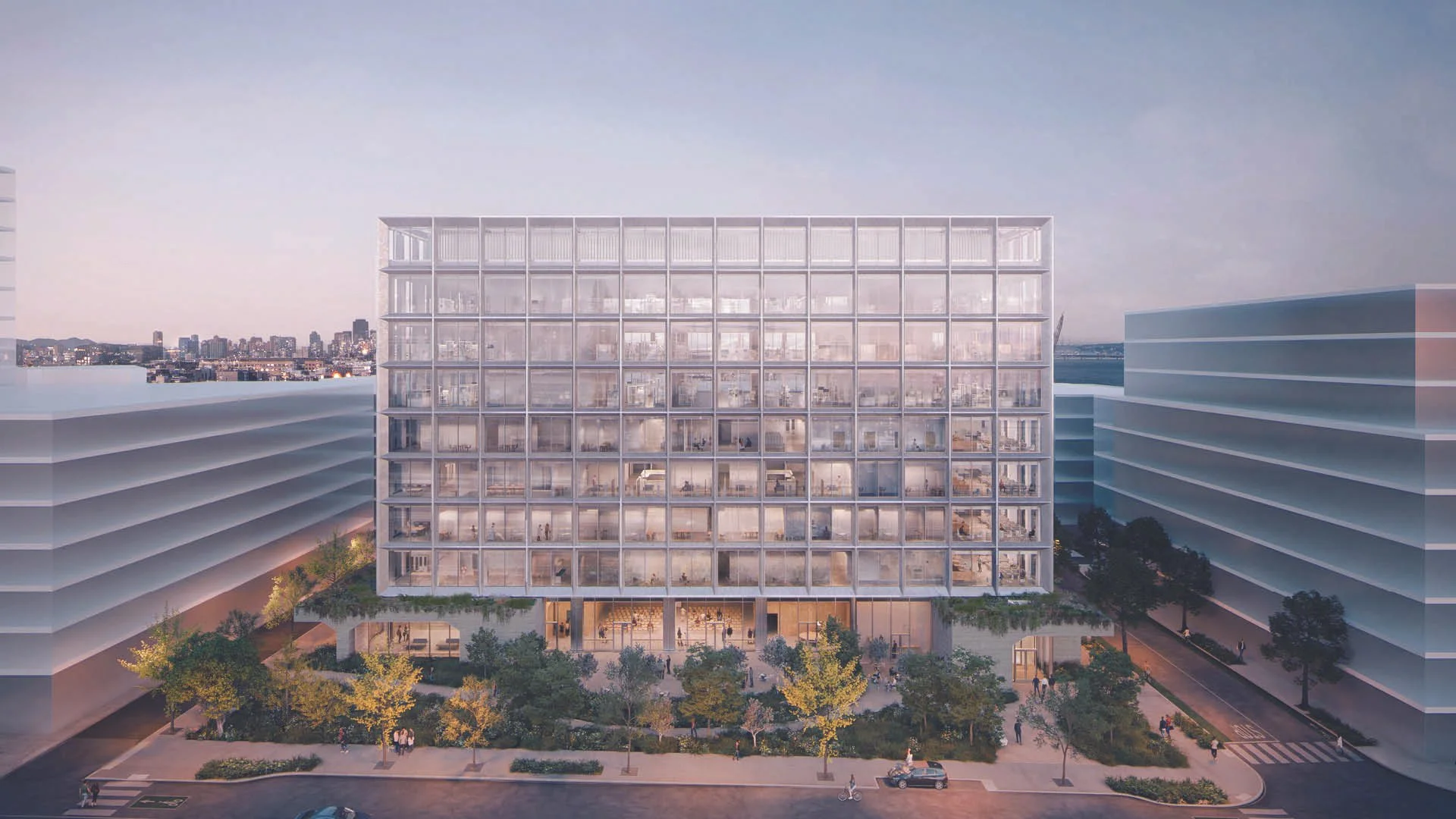
A RENDERING depicts the finished medical building that will sit atop UCSF’s underground proton therapy center. | Image: Webcor
Larry Mazzola Jr. completed a union apprenticeship, built a career in the pipe trades, and has spent years serving as business manager of Plumbers and Pipefitters Local 38 and president of the San Francisco Building and Construction Trades Council.
But there’s at least one subject he’s never encountered in all his years: “I never learned about protons,” Mazzola said with a laugh.
SF Building Trades members are currently active at the Potrero Power Station redevelopment site in the Dogpatch, where developer Fifth Space and general contractor Webcor are building a 300,000-square-foot clinical and life sciences facility for UC San Francisco.
The project’s most distinctive component will be located underground: a proton therapy center designed to treat cancer patients. Unlike conventional radiation therapy, proton therapy can target tumors with greater precision while limiting radiation exposure to surrounding healthy tissue.
“This should put a majority of [building trades members] to work, and it should be true for all the trades. This job is going to create thousands of jobs.”
Proton therapy facilities are typically built as standalone structures above ground. In San Francisco, where real estate is at a premium, the developers opted to build underground.
Because of the complexities of proton therapy, numerous technical challenges exist that the trades must navigate. The proton equipment requires an exceptionally stable built structure, as well as precise installation. The facility will extend down to bedrock, while thick shielding concrete will contain extensive mechanical, electrical, and plumbing systems.
“From what I’ve learned, there’s going to be a massive amount of piping and electrical work because of the different systems they have in that new hospital, including the proton system,” Mazzola said.
The proton equipment is being manufactured while the building is under construction. Large openings must be preserved so that major components can be lowered into the underground facility later.
“They’re actually bringing their people over who design and build these proton systems to oversee our people installing it,” Mazzola said. “That’s how intricate this thing is.”
While the proton treatment center is underground, an above-ground building will rise eight stories and contain UCSF clinical space, including specialty-care functions and a compounding pharmacy, as well as a life-sciences incubator for early-stage companies that require access to laboratory space.
“It’s like a WeWork for lab space, if you will,” said Valentin Doering, project executive at Fifth Space.
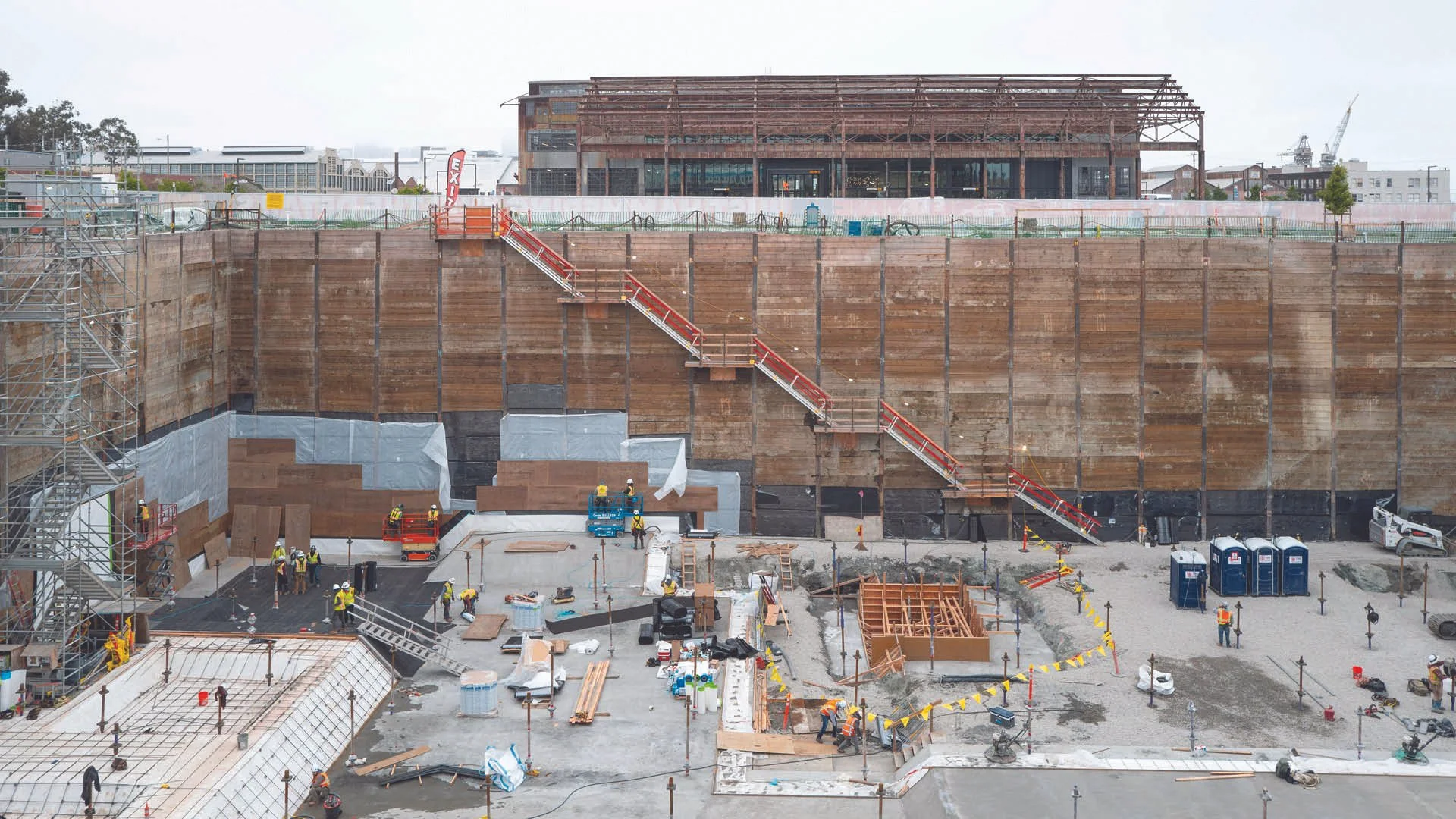
THE FOUNDATION for UCSF’s proton therapy center is seen under construction at the Potrero Power Station redevelopment site. The build extends 70 feet underground. | Photo: Webcor
Mazzola said the project will create thousands of jobs for the trades. It’s being built under the project labor agreement covering the larger Potrero Power Station redevelopment megaproject.
Operating engineers, laborers, ironworkers, carpenters, and waterproofers are already involved, with plumbers, electricians, and additional specialty trades expected as the building progresses.
“This should put a majority of them to work, and it should be true for all the trades,” Mazzola said of building trades workers. “This job is going to create thousands of jobs.”
For Local 38, the timing is important. Mazzola said some members have been traveling to San Jose and Sacramento for work, while others are still sitting on the union’s out-of-work list.
“It’s a big shot in the arm,” he said.
For now, however, the most visible feature of this state-of-the-art structure is the enormous excavation, which extends 70 feet down, where the treatment center is being built.
“I was down there about three weeks ago, and I saw the big hole in the ground,” Mazzola said. “It’s really deep, and it’s going to be massive.”
The UCSF building occupies block 2 of Fifth Space’s 29-acre redevelopment of the former power plant. But the underground proton therapy structure may be the most fascinating — and most challenging — endeavor of all of the megaproject’s elements.
“We at Fifth Space pride ourselves on doing the things that are difficult,” Doering said.